 Reviews


 Proudly American


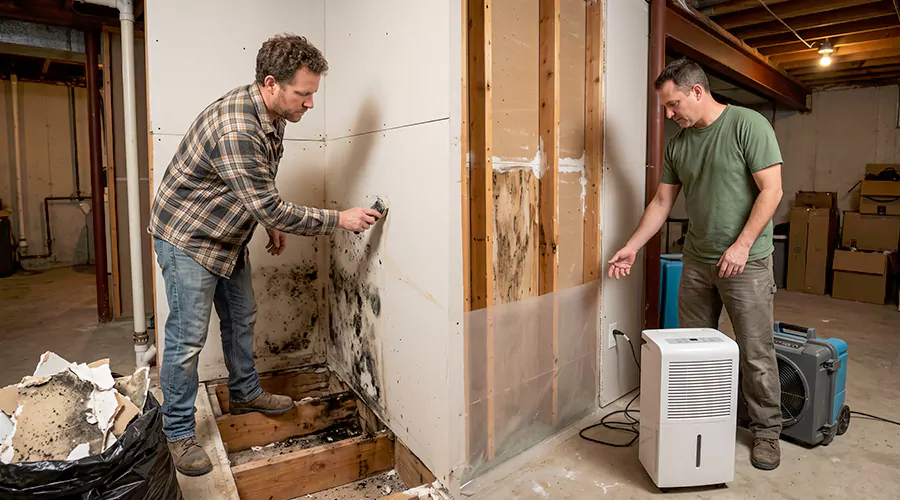
Mold removal usually means cleaning or removing visible mold, while mold remediation is the broader process of correcting moisture, controlling contamination, removing affected materials, and drying the area. Complete removal of every mold spore indoors is not realistic because mold spores naturally exist in indoor and outdoor air.
The practical goal is to remove active growth and correct the moisture problem that allowed it to develop. If the water source remains, visible mold can return after cleaning.
What Does Mold Removal Mean?
Mold removal describes the physical step of taking mold growth off a surface or removing material that cannot be cleaned. Hard surfaces may be scrubbed with detergent and water. Moldy porous products may need disposal because growth can extend into spaces that surface cleaning cannot reach.
Examples include:
- Cleaning mold from tile
- Removing contaminated carpet padding
- Taking out damaged ceiling tiles
- Discarding badly affected drywall
The term can be misleading when it suggests a building can be made completely free of mold spores. EPA guidance explains that spores remain naturally present indoors, while moisture control keeps them from developing into active growth.
What Does Mold Remediation Mean?
Mold remediation addresses the contaminated material and the conditions that allowed it to grow.
A typical process is:
- Find the moisture source.
- Stop the leak or water entry.
- Determine how far growth has spread.
- Isolate the area when needed.
- Remove materials that cannot be cleaned.
- Clean salvageable surfaces.
- Dry the remaining structure.
- Recheck for moisture or visible growth.
Mold remediation and restoration can continue into repairs once the area is clean and dry. New finishes should not cover an active moisture problem.
How Do Mold Removal and Mold Remediation Compare?
The main difference is scope. Removal focuses on contaminated material, while remediation also addresses the moisture problem.
| Area of Work | Mold Removal | Mold Remediation |
|---|---|---|
| Visible mold cleanup | Yes | Yes |
| Moisture correction | Not always | Yes |
| Containment | Limited | When needed |
| Material evaluation | Sometimes | Yes |
| Structural drying | Not always | When needed |
| Repair planning | Usually separate | May follow |
A mold removal service may therefore be only one part of a larger project when hidden moisture is present.
Why Is Moisture Control So Important?
Mold cannot keep growing without moisture. Cleaning a surface while leaving a roof leak or plumbing problem untreated creates conditions for the growth to return. The CDC states that indoor mold indicates a water or moisture problem. It also advises drying wet materials within about 48 hours or removing materials that cannot be dried.
Does Remediation Always Require Demolition?
No. Material removal depends on the surface and the depth of contamination. Hard surfaces can often be cleaned and dried. Porous materials are harder because mold can grow inside fibers or openings below the surface. The EPA generally treats areas smaller than about 10 square feet as small mold problems that many homeowners can address themselves when the water source is simple. Larger areas or substantial water damage call for broader planning.
| Material Condition | Likely Response |
|---|---|
| Mold on sound tile | Clean and dry |
| Moldy carpet padding | Removal may be needed |
| Soft mold-damaged drywall | Replacement may be needed |
| Wet insulation with growth | Removal is often practical |
What Warning Signs Suggest Remediation Is Needed?
Recurring growth suggests the moisture source may still be active.
Watch for these signs:
- Mold returns after cleaning.
- A musty odor remains.
- Drywall stays damp.
- Several rooms show growth.
- Water stains keep changing.
- Insulation has become wet.
- Growth appears near HVAC components.
- The affected area is larger than about 10 square feet.
Black mold remediation follows the same moisture-control principle. Mold color alone does not determine the correct cleanup method.
What Can You Check Yourself?
A moisture comparison can show whether an affected area is still wet. Use a moisture meter suited to the material and compare the affected surface with the same material in a dry part of the building.
- Record a dry reference reading.
- Test the affected surface.
- Mark the location.
- Repeat the reading the next day.
- Look for steady improvement.
Do not open a wall simply to search for mold when wiring or plumbing may be hidden inside.
When Should You Call a Professional?
Professional help is appropriate when mold covers more than about 10 square feet or substantial water damage is involved. It is also appropriate when sewage caused the moisture problem or when HVAC contamination is suspected. (US EPA)
Consider professional assessment when:
- Mold affects several rooms.
- Growth is hidden inside walls.
- Sewage or floodwater is involved.
- HVAC components show contamination.
- The moisture source cannot be identified.
- Mold returns after repeated cleanup.
A mold remediation service can use containment when disturbing affected materials could spread debris into clean spaces.
How Can You Prevent Mold From Returning?
Prevention starts with keeping building materials dry. Fix plumbing or roof leaks promptly and investigate recurring condensation before it becomes a larger problem.
Useful habits include:
- Check beneath sinks monthly.
- Inspect appliance hoses several times a year.
- Keep indoor humidity below 60 percent when possible.
- Dry water-damaged materials within 24 to 48 hours.
- Investigate musty odors promptly.
Conclusion
Mold removal focuses on taking visible growth or contaminated material away. Mold remediation addresses the larger problem by correcting moisture before cleanup is considered complete. The distinction matters because removing mold without fixing the water source can provide only a temporary result. If growth is widespread or hidden, professional assessment can help determine how much remediation is required.
Frequently Asked Questions
Is mold removal enough for a small bathroom spot?
It can be when the area is small and the moisture source is simple to correct. The surface should dry fully afterward.
Does mold remediation remove every mold spore?
No. Mold spores naturally exist indoors. The goal is to remove active growth and control moisture.
Is mold testing required before remediation?
Usually not when mold is already visible. CDC guidance does not recommend routine mold testing for most building evaluations.
Does remediation always include replacing drywall?
No. Replacement depends on saturation and contamination depth. Sound material may sometimes remain.
Can mold return after remediation?
Yes. Mold can return if a new leak develops or the original moisture problem remains.
Is remediation the same as mold damage restoration?
They overlap, but mold damage restoration can extend into rebuilding finishes after cleanup is complete.